
Before Bitcoin
How could money move across the internet? Some people worked on privacy, others on scarcity or a record nobody could quietly rewrite. Their ideas help explain what Satoshi put together.
1982 · David Chaum
Private digital cash
Blind signatures let a bank issue digital cash without seeing which of its coins a customer later spent. DigiCash built on that idea.
Earlier experiment
January 1991 · Stuart Haber and W. Scott Stornetta
Linked timestamps
Link a document’s timestamp to earlier records, so changes to the sequence leave evidence.
Cited in the whitepaper
1998 · Wei Dai
b-money
Imagine people keeping their own copies of the accounts and using computing work to create money.
Cited in the whitepaper
August 1, 2002 · Adam Back
Hashcash
Make a puzzle costly to solve and cheap to check. Hashcash used that idea against spam. Bitcoin adapted it for mining.
Used as a model
August 15, 2004 · Hal Finney
Reusable proof of work
Finney made proofs of work into tokens a person could pass to someone else. A server kept track of which had been spent.
Earlier experiment
December 2005 · Nick Szabo
Bit Gold
Szabo proposed chaining and timestamping proofs of work. Satoshi named Bit Gold as a predecessor in 2010.
Acknowledged later
What makes something money?
Bitcoin was a big bang. It created a scarce digital resource people could send directly. That settled a technical question and left a monetary one. How should new money reach people, and what would make them want to earn it, accept it and spend it?
- Mises asks how planners can calculate costs. In 1920, the Austrian economist argued that a socialist economy without markets for capital goods would lack the prices planners need to tell which uses of scarce resources cost more. Read Mises’s essay.
- Graeber starts with who owes whom. In Debt: The First 5,000 Years, he challenges the story that people first bartered, then invented money. He looks at how people recorded debts and settled obligations long before modern cash. See Graeber’s book.
- Modern Monetary Theory starts with who issues the money. L. Randall Wray argues that a government spending its own currency faces a different constraint from a household. It can issue money, but that cannot create more workers, fuel or food on demand. See Wray’s introduction.
Lotus builds on the technical breakthrough and changes the monetary design, starting with how coins come into circulation and why people would use them.
Two people, no cashier
“sent directly from one party to another without going through a financial institution”
Bitcoin whitepaper, abstract
Satoshi Nakamoto circulated a whitepaper about sending electronic cash directly. Bitcoin’s first block followed on January 3, 2009. The software announcement went out on January 8, asking readers to run a node if they could.
When a mailing-list reader asked about scaling, Satoshi used Visa’s traffic to think through bandwidth and imagined lighter verification for users. That argument about capacity was there before the software launched.
Satoshi sends Hal ten bitcoin
Hal Finney had been running Bitcoin and reporting bugs. Satoshi sent him ten bitcoin to see whether a payment between two people worked. Finney later wrote that it was the first transaction. The transfer is recorded in block 170.
Sources and recordings
Laszlo Hanyecz pays 10,000 bitcoin for two pizzas
Laszlo Hanyecz asked the forum for a couple of pizzas in exchange for 10,000 bitcoin. On May 22 he reported the trade and thanked the user jercos. The software could already move coins. The forum helped him find someone willing to take them for dinner.
Sources and recordings
Satoshi hands the alert key to Gavin Andresen
Satoshi told Mike Hearn that Bitcoin was in good hands with Gavin Andresen and the other contributors. Around the same time, Satoshi sent Gavin the key used to warn Bitcoin users about emergencies.
Anyone could still download and change the source code. Far fewer people could put out the version most users would install. Bitcoin had taken the cashier out of a payment. The people who maintained it still had to trust one another.
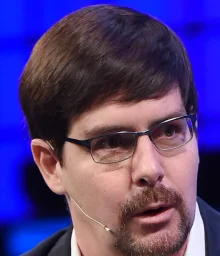
Gavin takes Bitcoin to Langley
Gavin Andresen told Satoshi about an invitation from In-Q-Tel in their known April 26 email exchange. The next day he told BitcoinTalk he had agreed to give a presentation about Bitcoin at CIA headquarters to an emerging-technologies conference.
Satoshi had already told Mike Hearn he was moving on on April 23. No reply to Gavin’s April 26 email is known. Gavin gave the talk in June and later shared the slides on the forum.
Bitcoin cuts the reward for mining a block in half
At block 210,000, Bitcoin’s block subsidy dropped from 50 to 25 bitcoin. Miners still collected transaction fees. The schedule had been written into the software before Bitcoin had a market price.
Sources and recordings
One block, two versions of Bitcoin
Newer Bitcoin software accepted a block that some older nodes could not process. Suddenly two groups of computers disagreed about which payments counted.
Developers and mining pools coordinated a return to the chain the older software could follow. Gavin sent an alert and later wrote the postmortem. Keeping a decentralized system running took a very human phone book.
Sources and recordings
A payment and a business face different rules
The U.S. Treasury’s financial-crimes bureau distinguished people who use virtual currency from businesses that administer or exchange it. Using it to buy goods did not by itself make someone a money services business. Exchanges and transmitters could have registration and reporting duties.
Sources and recordings
An arrest in a San Francisco library
Federal agents arrested Ross Ulbricht and took down Silk Road, a marketplace that used Bitcoin and facilitated illegal drug sales. Agents seized his laptop, and prosecutors obtained warrants to seize bitcoin. The site went offline while Bitcoin’s network kept running.
A jury convicted Ulbricht in 2015. He received a full presidential pardon on January 21, 2025.
Mt. Gox shuts down with customers’ bitcoin out of reach
Mt. Gox halted bitcoin withdrawals and applied for civil rehabilitation in Tokyo. Customers who had left their coins on the exchange had to go through a legal claims process. Holding a balance at an exchange meant depending on that company to make good on it.
Sources and recordings
A new maintainer takes the job
Gavin Andresen handed the lead maintainer role to Wladimir van der Laan and stayed on as a contributor. The handoff left Gavin with privileges in the GitHub organization.
Who had the job and who had the keys were two different questions. In another two years that difference would matter.
Erik Voorhees settles with the SEC over shares sold for bitcoin
Erik Voorhees raised money for FeedZeBirds and SatoshiDICE by selling shares to people who paid in bitcoin. The SEC said he needed to register the offerings. Voorhees agreed to pay more than $50,000 in penalties and surrendered profits, without admitting or denying the findings.
Voorhees and Charlie Shrem had both appeared in The Rise and Rise of Bitcoin. The same year the documentary reached audiences, their businesses faced different U.S. enforcement actions.
A dollar token rides on Bitcoin
Tether began issuing its dollar token, later known as USDT, on Omni, a layer that recorded token activity using Bitcoin transactions. Traders could move a dollar-denominated balance between participating exchanges without sending a bank wire for each transfer.
Bitcoin recorded the transfers. The promise behind the dollar token came from its issuer.
Adam Back and fellow researchers start Blockstream
Adam Back, Gregory Maxwell (nullc), Pieter Wuille and other researchers published a sidechains paper. Its pitch was to let other networks experiment while changes to Bitcoin’s base rules stayed conservative. Several of the authors founded Blockstream. The company raised $21 million in seed funding in 2014. Some of its engineers also maintained Bitcoin Core.
A salary changes what someone can afford to work on. Bitcoin paid miners for producing blocks. It had no built-in budget for the people maintaining the software. The teams competing to shape the network had to find their own money.

A New York judge sends BitInstant’s Charlie Shrem to prison
Robert Faiella sold bitcoin to buyers on Silk Road under the name BTCKing. He filled orders through the New York exchange BitInstant. Charlie Shrem, its former chief executive, pleaded guilty to helping operate an unlicensed money-transmitting business and received a two-year prison sentence. In Faiella’s case, the judge ruled that bitcoin could count as money under that federal law.
Gavin Andresen and Mike Hearn propose room for more payments
Bitcoin records payments in batches called blocks. Each block could hold only one megabyte of data. When a block filled up, a payment that missed it had to wait. Gavin Andresen proposed raising the limit to eight megabytes. Mike Hearn built the proposal into Bitcoin XT.
XT could make new rules available for people to run. It still needed miners to signal for the change. Publishing code and getting a network to follow it were very different jobs.
Sources and recordings
New York licenses virtual-currency businesses
New York’s BitLicense took effect. It required a license for covered virtual-currency business activity, including services that transmit or hold other people’s funds. A network could let anyone publish a payment while the businesses people used to reach it faced licensing rules.
Sources and recordings
Who gets to talk about Bitcoin?
As Bitcoin XT shipped, r/Bitcoin moderator theymos said the subreddit would treat promotion of XT as promotion of a competing currency. On BitcoinTalk, the fight was over whether XT threads belonged in the main Bitcoin boards or in the altcoin section. XT still followed the Bitcoin ledger while it waited for its proposed rules to activate.
Big-block supporters called the restrictions censorship. Some took the debate to r/BitcoinXT and to the already existing r/btc. The latter became a home for people who wanted to argue for bigger blocks. The software still shared one transaction history, but the community was already reading different conversations.
Core draws a different map
Gregory Maxwell, who posted as nullc, laid out a roadmap built around Segregated Witness and payment channels. SegWit changed how signature data counted toward the block limit. Payment channels could let people make many payments while recording fewer of them on the shared chain.
Where the XT proposal made room by raising the ceiling on a schedule, Core’s roadmap changed what counted against the ceiling and how often a payment needed to use that space.
Sources and recordings
Bigger blocks, different rules
Bitcoin Classic wanted a move from one to two megabytes. Bitcoin Unlimited’s Andrew Stone proposed letting operators choose what block sizes they would accept, with ways to follow blocks that received enough mining support. XT had proposed a schedule years into the future.
Even among people who wanted more payments on the main chain, agreement on the goal left a hard question. Should the limit come from a software release, an automatic schedule, or the choices of miners and node operators?
Sources and recordings

Hong Kong miners and developers agree on a plan to fit more payments
Participants in Hong Kong backed SegWit and work on a later hard fork that was expected to allow roughly two megabytes of data excluding signatures. The signers included Jihan Wu, Luke Dashjr, Matt Corallo and Peter Todd. Adoption was conditional on broad support.
The larger-block change never activated on Bitcoin. From the big-block side, the savings promised by SegWit and payment channels still left a question unanswered: how much demand could the base chain serve directly?
The man Satoshi trusted loses the keys
Gavin publicly backed Craig Wright’s claim to be Satoshi after a private demonstration. Wladimir van der Laan wrote that the team removed Gavin’s GitHub organization privileges. He gave a concrete reason: Gavin had previously said he would give Satoshi write access if asked. Wladimir wrote that others had asked Gavin to give up those privileges before the announcement.
The removal raised a question the block-size fight had made urgent. Anyone could publish a competing version. The small group with access to the familiar repository decided what could be merged there.
Backers announce $1.2 million for Bitcoin development
Bitmain, Bitcoin.com and other industry participants backed the $1.2 million Bitcoin Development Grant to support protocol work across different teams.
Bitcoin paid miners for finding blocks. It paid nothing automatically to the people working out how more payments could fit. Better rules would benefit every miner, exchange and wallet, even the ones that paid nothing to build them. Each business could wait for someone else to foot the bill. That is a public-goods problem and a market failure.
By August 2017, Amaury Séchet said the grant had sponsored his scaling research. He described it as support for the research itself, which gave him room to pursue the work that preceded Bitcoin ABC.
Bitcoin Unlimited bugs cost a block reward and knock hundreds of nodes offline
Bitcoin Unlimited had won support from large mining pools. In January, its software produced a block for Bitcoin.com that the network rejected. The pool lost the reward and fees for that block. In March, a separate vulnerability took hundreds of Bitcoin Unlimited nodes offline. Bitcoin.com’s pool reported that it kept mining through the outage.
Jonathan Toomim, who worked on Bitcoin Classic, recalls that work on a smaller, deliberate fork picked up again after the crashes. Bitcoin Unlimited had helped bring big-block miners and developers together. The eventual split also depended on people writing the new rules, miners choosing to run them, and the August deadline.

New York companies and miners back two ways to fit more payments
Digital Currency Group published a deal to make room for more Bitcoin payments. Businesses and miners backed speeding up SegWit, a change in how payment records fit into a block. They also wanted to double the block-size limit within six months. Together those changes were called SegWit2x. Another group was already preparing Bitcoin Cash.
Sources and recordings
Projects sell tokens to raise money. The SEC weighs in.
An initial coin offering, or ICO, let a project raise money by selling newly created tokens. Ethereum made it easy to sell them against ether. In the middle of the ICO boom, the U.S. Securities and Exchange Commission concluded that the tokens sold by one project, The DAO, were securities. Selling a token over the internet could still count as selling an investment.
Sources and recordings
Who can set the day?
BIP 148 asked node operators to start rejecting blocks that failed to signal for SegWit during a fixed window. The proposal came from the pseudonymous Shaolinfry. Luke Dashjr explained how to support it and made it available in Bitcoin Knots. It gave ordinary operators a way to put pressure on miners, with the risk that their software would follow a different chain.
Mining hardware maker Bitmain backed a contingency plan for a split. The fight that looked like a disagreement about megabytes was now about which groups could set a deadline others would have to live with.
The argument becomes two chains
Amaury Séchet led the development of Bitcoin ABC, which turned the plan for a split into software people could run. He presented it in Arnhem. On August 1, Bitcoin Cash split from Bitcoin and pursued more room for transactions on the base chain.
The fork raised the block limit to 8 MB. It also required a new way to sign BCH payments, SIGHASH_FORKID, so someone could not copy a newly signed payment to the other chain. The split was the beginning of the engineering work. The new chain had to get blocks out reliably, and every later change would need to be tested, packaged and put in the hands of miners and exchanges.
Sources and recordings
Bitcoin
- Bitcoin (BTC)
- Bitcoin Cash (BCH)
Four teams around the Bitcoin Cash fork
July 1, 2017
Bitcoin ABC
Amaury Séchet presented Bitcoin ABC in Arnhem. Freetrader recorded the initial release and published checksums for subsequent builds.
July 28, 2017
Bitcoin Unlimited
Andrew Stone and Andrea Suisani produced matching Mac builds for BUcash. Peter Rizun had proposed a separate way to coordinate larger blocks at a fixed block height that spring.
August 2017
Bitcoin Classic
Tom Zander managed releases of Bitcoin Classic. Its users could move to the Bitcoin Cash chain. When Classic shut down in November, Zander directed users to BCH.
August 25, 2017
Bitcoin XT
Tom Harding published an XT release that followed Bitcoin Cash by default. He and Dagur Valberg Johannsson had also worked with Jeff Garzik on a proposal for miners to vote on the block limit.
After the Bodog case, Calvin Ayre buys a Bitcoin news site
U.S. prosecutors unsealed an indictment against Bodog founder Calvin Ayre in 2012. While Ayre was living in Antigua, his lawyers negotiated a deal. In July 2017 he pleaded guilty to one misdemeanor and received a fine and a year of unsupervised probation.
The next month, Ayre’s media company announced that it had bought CoinGeek. His involvement in Bitcoin predated the deal. The English High Court later placed him among the people supporting Craig Wright’s 2016 public attempt to prove he was Satoshi. CoinGeek went on to back Bitcoin SV in the split of 2018.
One half of the compromise goes live
Bitcoin nodes running the upgrade began enforcing SegWit at block 481,824. The change counted signature data differently and fixed a way that signed transactions could have their identifiers changed. That helped make payment channels practical.
Bitcoin Cash had already split off with a larger limit for ordinary blocks. One network was making it easier to keep repeated payments off the shared ledger. The other was trying to make more room for recording payments directly.
Sources and recordings
Shammah Chancellor joins Bitcoin ABC
Shammah Chancellor joined Amaury’s effort around October 2017. He remembers a lively public debate and too few hands doing the protocol and release work. By December he was setting up automated builds. By March he was handling official Bitcoin ABC releases.
Chancellor recalls that an anonymous miner funded his work through a private fellowship. He sent email updates about once a week and says he was free to decide what to work on.
The second half of the deal falls apart
SegWit2x paired the SegWit upgrade with a later increase to two megabytes. After SegWit activated, Mike Belshe, Jihan Wu, Jeff Garzik and three other signers suspended the planned increase. They said they had failed to build enough agreement to change the rules without risking another split.
Roger Ver had agreed to hand over 1,000 BTC in exchange for 1,000 coins on the proposed new chain. Litecoin’s Charlie Lee, Ben Davenport, Alex Morcos and Tuur Demeester each took the other side for 250. The trade depended on the new chain reaching a minimum number of blocks. When the plan was suspended, the trade fell through.
Bitcoin (BTC)
- Bitcoin (BTC) continues
- SegWit2x plan shelved
The next night, Roger Ver makes his pitch
The day after the SegWit2x announcement, Roger Ver stood up at a Los Angeles Bitcoin meetup and argued that Bitcoin Cash could overtake Bitcoin in commerce. Bigger blocks were still his answer to congested payments. BCH already had a chain people could use.
Bitcoin.com had added BCH support to its wallet before the cancellation. Ver now used his platform to make a public case for spending it.


For a day, more money trades in BCH
Days after the SegWit2x suspension, CoinMarketCap’s snapshot showed $5.14 billion of reported Bitcoin Cash trading over 24 hours, against $4.91 billion for Bitcoin. Bitcoin still had the larger market value. How much changed hands and what all the coins were worth told different stories.
Sources and recordings
Bitcoin Cash changes its mining rules after blocks come in bursts
Bitcoin Cash’s emergency rule had helped the chain survive with a small share of Bitcoin’s mining power. It also made block production swing between bursts and long waits. Neil Booth, Tom Harding and Amaury Séchet each proposed a replacement.
Some participants wanted to keep the emergency rule or return to Bitcoin’s original system. Chancellor recalls opponents warning that a new algorithm would be disastrous. Bitprim and nChain tested the new proposals separately and recommended the same choice. Bitcoin ABC shipped Séchet’s algorithm for the November 13 upgrade. What began as an argument about block size had become a question of which rules would make a payment arrive predictably.
Coinbase lists BCH. The market lasts 160 seconds.
At 5:20 p.m. California time on December 19, Coinbase’s GDAX exchange opened its BCH–USD market. BCH traded as high as $9,500 there. Coinbase halted matching after two minutes and 40 seconds. It said heavy buying had eaten through the available sell orders on that market.
Coinbase reported $15.5 million in BCH–USD trades in that window. Its BTC–USD market could have traded at most $11.5 million over the full three minutes, based on each minute’s high price multiplied by its volume. BCH briefly led that exchange by dollars traded. Bitcoin was still selling for roughly $16,000 per coin there.
Coinbase reopened BCH–USD trading the following morning at 11 a.m. The other BCH trading pairs had never opened for matching on launch night.
Bitcoin Cash gets its own address format
Bitcoin Cash and Bitcoin addresses looked alike, making it easy to copy an address from the wrong network. Bitcoin ABC shipped CashAddr with a bitcoincash: prefix. The way wallets wrote an address changed. The rules that made a payment valid stayed the same, so the change required no hard fork.
Even an address format became a fight over who could change Bitcoin Cash. Chancellor later described an organized campaign against it that he believed was made to look like grassroots opposition.
Jason Cox helps get Bitcoin Cash’s new script instructions ready
Jason B. Cox had already contributed developer documentation in November 2017. Shammah Chancellor remembers him taking on more around February 2018. On March 16–17, the public review log shows Cox reviewing and requesting changes to tests for the new script instructions.
The argument over who would do the work
Andrew Stone proposed OP_GROUP so Bitcoin Cash could track tokens alongside its own coins. Chancellor describes a push to put it in the May release and says some developers refused to agree on a specification unless it included BIP135, a way to let miners signal which rule changes they backed. In his account, the OP_GROUP dispute brought teams close to a split before the upgrade had even shipped.
In his March 15 letter to the other teams, he called for a written specification, review across teams and tested releases well before activation. That was the part nobody could settle in a comment thread. Someone still had to make the software ready to run.
Try the payment-channel idea with real money
Lightning Labs published the first version of its lnd software that could run on Bitcoin’s live network. People could open a channel, make multiple payments through it, and settle on Bitcoin later. This early release was for developers and technical users.
It was one answer to the capacity fight: move repeated payments off the ledger. Bitcoin Cash was pursuing a different answer in parallel, making more of those payments fit on the ledger itself.
Sources and recordings
Bitcoin Cash raises blocks to 32 MB and restores nine script instructions
An opcode is one instruction in a program that can set conditions on spending a coin. The May upgrade restored nine operations. OP_CAT and OP_SPLIT joined and split data. OP_AND, OP_OR and OP_XOR compared individual bits. OP_DIV and OP_MOD calculated a quotient and remainder. OP_NUM2BIN and OP_BIN2NUM converted between numbers and byte sequences.
The block limit rose from 8 MB to 32 MB. The recommended relay limit for OP_RETURN, which lets a transaction carry data in an unspendable output, rose to 223 bytes. Andrew Stone’s OP_GROUP token proposal and the BIP135 voting proposal stayed out of the upgrade.
What if agreement could spread like a rumor?
A group writing as Team Rocket introduced the Snow family of consensus protocols. Each node repeatedly asks small, randomly chosen groups of peers what they see. Repeated agreement can build confidence that the rest of the network sees the same thing, even when some peers lie or fail.
The paper analyzes the chance of disagreement under its stated assumptions. The Bitcoin ABC team later saw a use for it alongside mining: use proof of work to produce blocks and use polling to help agree when those blocks are final.
What if a bigger block is still slow to check?
Joannes Vermorel, Amaury Séchet, Shammah Chancellor and Tomas van der Wansem proposed a common way to sort the transactions in a block. Shammah explained how a predictable order could help share the work of checking blocks across more cores and eventually more machines.
Agreeing to make blocks bigger had been the easy part. The people who had fought for it now had to agree which rules to change and which risks were worth taking.
Can one release accommodate both camps?
Bitcoin Unlimited’s Andrew Stone proposed putting changes from both camps into its software, with settings that let operators choose some of the rules to enforce. Bitcoin ABC and the Bitcoin SV team planned to enforce different rules in November. Bitcoin SV’s release advertised 128 MB blocks and restored four instructions for spending programs. OP_MUL multiplied numbers, OP_INVERT flipped bits, and OP_LSHIFT and OP_RSHIFT moved bits to the left or right.
A single program could give operators a choice. It still could not make computers that enforced conflicting rules agree on a block.
The big-block camp splits
Bitcoin ABC adopted a common transaction order called CTOR and added OP_CHECKDATASIG and OP_CHECKDATASIGVERIFY so spending programs could check a signature on outside data. It also required a minimum transaction length and tightened the rules for spending scripts. Bitcoin SV took a different set of rules, including the four instructions nChain had restored.
The dispute moved from forums to mining pools. Craig Wright publicly said the competition would continue. Calvin Ayre’s CoinGeek backed SV with mining power while other pools mined blocks for ABC. ABC soon released rolling checkpoints so its software would normally refuse to replace blocks buried ten confirmations deep. The ABC-aligned chain kept BCH and SV continued as BSV. Shammah stepped down as a Bitcoin ABC maintainer in December.
Sources and recordings
Bitcoin Cash
- Bitcoin Cash (BCH)
- Bitcoin SV (BSV)
A fork lands in federal court
United American Corp. sued after the Bitcoin Cash split. It accused miners, exchanges and developers of working together to take control of the network. The original complaint named Shammah Chancellor, Jason B. Cox and Amaury Séchet and sought to stop the developers from implementing checkpoints after the split.
The court dismissed Séchet without prejudice in 2020. In 2021 it dismissed the amended complaint and entered judgment for the remaining defendants, including Chancellor and Cox. A decision about which blocks software should accept had become a question argued in federal court.
After the split, the teams still had to talk
David R. Allen hosted a Bitcoin Cash development call published by The Future of Bitcoin. Jason B. Cox, Amaury Séchet and Antony Zegers attended for Bitcoin ABC, alongside Andrea Suisani of Bitcoin Unlimited, Matias Garcia of BitPay and independent developer Mark Lundeberg.
The agenda got down to what was ready for May, what would have to wait and who could provide the test network. Even after the split, getting a release out took work across project lines.
Sources and recordings
The dollar promise reaches court
New York’s attorney general announced a court order during its investigation of Bitfinex and Tether. The office said Bitfinex could no longer access about $850 million it had placed with a payment processor and had drawn on Tether’s reserves. The investigation concerned the companies’ statements and the movement of funds between them.
Sources and recordings
Bitcoin Cash gains Schnorr signatures, then an attack stalls payments
The upgrade added Schnorr signatures, a different way to check that a particular key authorized a payment or signed a message. It changed four existing instructions: OP_CHECKSIG, OP_CHECKSIGVERIFY, OP_CHECKDATASIG and OP_CHECKDATASIGVERIFY. The upgrade also reopened a way to recover certain BCH sent to Bitcoin SegWit addresses.
On upgrade day someone exploited a bug in Bitcoin ABC. Affected miners could still produce blocks, but those blocks could not carry normal payments until operators ran a fix. ABC’s postmortem says regular payments went unconfirmed for about two hours. It gives no identity for the attacker.
Sources and recordings
Bitcoin Cash lets wallets use Schnorr when several people must sign
The November upgrade extended Schnorr support to OP_CHECKMULTISIG and OP_CHECKMULTISIGVERIFY. These instructions let a spending rule require approval from more than one signer. The upgrade also required shorter, standard encodings for values passed into spending programs, closing off some ways a third party could alter a transaction’s ID.
Both changes had been absent from the May release. In the February developer call, the teams recorded that the shorter encoding rule would not be ready by May. The November 7 call covered the final specification before activation.
Bitcoin Cash upgrades its script rules. The funding vote falls short.
The May upgrade introduced OP_REVERSEBYTES, which flips the order of the bytes in a piece of data. It also replaced the old method of limiting how many signature checks a transaction could demand. The goal was to count the actual checks a node performs.
Bitcoin ABC also shipped a miner vote on funding development from block rewards. Opponents released Bitcoin Cash Node from ABC’s code with the funding logic removed. The proposal never activated. In November the funding fight returned with a mandatory rule in ABC and an actual chain split.
A payment inside a conversation
In a recording published on May 28, Shammah Chancellor and Harry Barber demonstrated Stamp, where a payment could be part of a conversation. Shammah’s essay on identity described why people should be able to keep their contacts and speak without relying on one platform to let them in.
This was a different question from how many transactions fit in a block. Give someone a way to pay directly, and what might they use it for?
Did new Tether push up Bitcoin’s price?
John Griffin and Amin Shams published a study of the 2017 rally. They found that Tether flows linked to one large Bitfinex participant often followed Bitcoin price drops and were followed by price increases. They argued the pattern fit a theory in which newly issued Tether was used to buy Bitcoin and push its price up. Tether disputed their interpretation.
The authors also found unusually large Bitcoin outflows from Bitfinex’s reserve wallets near the end of months with high Tether issuance. They suggested that selling Bitcoin for dollars could have helped cover a reserve shortfall. The public data show coins leaving the wallets. Confirming where sale proceeds went would require bank and trading records.
This time the fight is over the block reward
Both sides changed how mining difficulty adjusted. Bitcoin ABC also required miners to direct 8% of the block reward to infrastructure. Bitcoin Cash Node left out the required payment and raised donations through a Flipstarter campaign. A pool running one set of rules could produce a block the other side refused. The network split. Bitcoin Cash Node’s chain kept BCH. Bitcoin Cash ABC continued separately.
Bitcoin Cash
- Bitcoin Cash (BCH)
- Bitcoin Cash ABC (BCHA)
Who stands behind a digital dollar?
New York’s attorney general announced an $18.5 million settlement with Tether and Bitfinex. The investigation found that the companies had overstated Tether’s reserves and had failed to disclose transfers between them. The agreement required reporting on reserves and an end to covered activity with New York customers.
Can a court make a developer move someone’s coins?
Tulip Trading, a company associated with Craig Wright, claimed it had lost access to Bitcoin worth billions of dollars. It asked a court to make developers take steps that would let it move the coins. Amaury Séchet and Jason B. Cox were among the people it sued.
The Court of Appeal allowed the case to proceed. Tulip discontinued it in April 2024 before trial. The case turned an old technical question into a legal one: if developers can publish an update, when does that give them control over other people’s money?
Beeple’s digital collage sells for $69.3 million
Christie’s auctioned Beeple’s collage of 5,000 images along with an NFT, a unique token whose owner can be recorded on a public ledger. Anyone could see the image, while only the buyer received the token. A kind of software many people knew for payments now had an auction room talking about digital ownership.
Sources and recordings
Start it by giving it away
Lotus started a new chain from the Bitcoin ABC codebase on June 21. Its first block carried a line from John 1:1 about the Logos. The original Lotus site described giving Lotus as a way to show appreciation. On July 1, Bitcoin Cash ABC renamed its own continuing chain eCash.
Tobias Ruck contributed to lotusd and wrote Chronik. Maff built the explorer. Mags maintained Vase and built the blog. Nghia Cao built SendLotus and ran GiveLotus2Vietnam. Sean Ballard kept people coming together at online meetings. The chain was new. The relationships that made it useful had to be built by hand.
V1 was the smallest version that could test the idea. It tied new issuance to mining difficulty and burned part of transaction fees. Chancellor later wrote that the community lacked the resources to keep momentum, and users had few reasons to come back. Looking back, he also sees a missing financial reason to take a chance early. V1 had no dedicated early issuance schedule.
Bitcoin ABC software
- Lotus V1 begins at its own first block
Bitcoin Cash ABC changes its name to eCash
Bitcoin Cash ABC became eCash. People holding coins on that chain kept their holdings through the rename. Lotus, launched just days before, had borrowed the ABC code and started its own ledger.
Those are two different ways to continue a project. eCash carried the old balances forward. Lotus could begin with a new distribution because it began with a new first block.
Sources and recordings
Bitcoin Cash ABC (BCHA)
- eCash (XEC)
A country makes Bitcoin legal tender
El Salvador’s Bitcoin Law took effect. Businesses were generally required to accept Bitcoin when offered, with an exception for people without the technology needed to transact. It was the first country to give Bitcoin legal-tender status.
A reform in 2025 made private-sector acceptance voluntary and limited the public sector’s role.
What the reserve records showed
The U.S. Commodity Futures Trading Commission ordered Tether to pay $41 million. The regulator found that in a 26-month sample covering 2016 through 2018, Tether held sufficient fiat reserves in its accounts to cover circulating tokens on 27.6% of days.
The order concerned claims about reserves. The separate question of who moved Bitcoin’s price belongs to the research and the trading record.
Sources and recordings
More ways to set conditions on a payment
Bitcoin activated Taproot at block 709,632. It brought Schnorr signatures and a way to reveal only the spending conditions a payment actually used. A cooperative spend could reveal less about the other terms the parties had agreed to.
Sources and recordings
A jury weighs a claim to early Bitcoin
David Kleiman’s estate claimed that Kleiman and Craig Wright were partners and that the estate was owed half of the bitcoin allegedly mined in that partnership. The jury rejected the partnership claim and separately awarded $100 million to W&K Info Defense Research on a claim involving property.
The trial decided claims between the parties. Wright’s claim to have created Bitcoin would be tried directly in another court.
Six years later, investigators make arrests
U.S. agents arrested Ilya Lichtenstein and Heather Morgan in the investigation of bitcoin stolen from Bitfinex in 2016. Lichtenstein admitted to the theft. Both later pleaded guilty to roles in laundering the proceeds.
The case showed how a public record could remain relevant to investigators years after an exchange breach.
A second way to agree on a block
The eCash network added Avalanche voting to finalize blocks after miners produced them. Proof of work still produced blocks. The new layer gave nodes a way to agree that a block should stay put even if a competing chain appeared later.
Sources and recordings
Aria DiMezzo gets 18 months over bitcoin sales in New Hampshire
Aria DiMezzo sold bitcoin for dollars through bank accounts in her name and in the name of the Reformed Satanic Church, which she founded. She was sentenced to 18 months for running an unlicensed money-transmitting business. In the same case, Nobody, formerly Richard Paul, pleaded guilty to wire fraud. Ian Freeman later received an eight-year sentence, which a federal appeals court upheld in 2025.
Bitcoin reaches ordinary brokerage accounts
The SEC approved exchange rule changes letting U.S. exchanges list spot Bitcoin products. A person could get exposure to Bitcoin through fund shares in a brokerage account. Holding those shares gives people a different experience from keeping coins in a wallet and paying someone directly.
Sources and recordings
A Queens trader gets 16 months after trading bitcoin with an undercover agent
Mustafa Goklu offered cash for bitcoin on LocalBitcoins under the name Mustangy. He exchanged about $133,000 with an undercover DEA agent after being told the bitcoin came from drug trafficking. A jury convicted him of money laundering and running an unlicensed money-transmitting business. A federal judge in Brooklyn sentenced him to 16 months.
Sources and recordings
A New York jury convicts the operator of dozens of bitcoin ATMs
Robert Taylor had bitcoin kiosks in at least 46 New York City locations, mostly laundromats. Manhattan prosecutors said the machines turned more than $5.6 million in cash into bitcoin from 2017 to 2018. A state jury convicted Taylor on seven counts, including operating an unlicensed money-transmission business, tax fraud and filing false documents.
Sources and recordings
A court answers the Satoshi claim
The High Court in London found that Craig Wright did not write the Bitcoin whitepaper, create Bitcoin, or operate as Satoshi Nakamoto.
The fight that once cost Gavin his repository access ended up in a judgment running hundreds of pages. A court could decide the identity claim. The work of making direct payments useful still belonged to the people building and using the software.
The U.S. writes rules for dollars that move as tokens
A dollar stablecoin is a token meant to stay worth one dollar. Tether had already put the idea to work on Bitcoin years before. By 2025, U.S. lawmakers treated the tokens as a possible payment system. The GENIUS Act set federal rules for payment stablecoin issuers, including requirements for reserves and redemption.
Sources and recordings
Roger Ver and U.S. prosecutors reach a tax agreement
After his 2024 arrest in Spain on U.S. tax charges, early Bitcoin promoter Roger Ver reached a deferred prosecution agreement. Under its terms, he acknowledged that his 2016 filings did not report all his bitcoin and agreed to pay back taxes, interest and penalties.
Samourai Wallet’s founders receive federal prison sentences
Samourai Wallet operated a service that made it harder to trace which bitcoin payments belonged together. New York federal prosecutors charged its two founders in April 2024. Keonne Rodriguez and William Lonergan Hill later pleaded guilty to conspiring to operate an unlicensed money-transmitting business that knowingly handled criminal proceeds. Rodriguez received five years and Hill four.
What would make people show up early and come back?
In What Comes After Bitcoin, Chancellor described a second attempt. The monetary design adds a larger block reward early on which gradually declines. Continued issuance still responds to mining work. The idea is to give early miners more reason to help start the network, while making it possible to keep getting Lotus into people’s hands over time.
Lotus aims to launch with a complete core protocol. The rules for handling more payments, setting fees and attaching conditions to payments are designed into the first release. The goal is to avoid making people wait for another fight over the basic rules once the network grows. The public launch is still ahead, and bugs will still need fixing.
The other change is to give people a reason to return. Vase is the wallet for paying someone. Rapture explores using payment inside a conversation, so the money has a job even before a shop takes it.
The current development effort works from the earlier code and designs a separate network with its own starting block. A development build has recorded a real wallet payment on a private network. The public network and its launch settings are still in development.
Lotus and Bitcoin ABC software
- Lotus V2 · separate genesis in development
Bitcoin, in the order of Melchizedek
Lotus inherited the code and began with its own first block. Its claim to the tradition is in what it does: give two people a way to pay directly and give more people a way in. The fights over Bitcoin showed what happens when a system rewards one kind of work and depends on other people to do the rest.
The name Melchizedek comes from a biblical image of righteousness and peace. For Lotus, that means starting with a gift and letting people choose what they accept from each other. Vase makes a payment tangible. Rapture brings the conversation back into it.